AI use across HR functions climbed to 43% in 2026, up from 26% in 2024, and CHROs project 327% growth in AI agent adoption by 2027. The AI in HR market, valued at $6.53 billion in 2025, is projected to reach $59.22 billion by 2035 as organizations replace manual workflows with autonomous agents across recruiting, onboarding, compliance, and employee experience.
For US businesses, the compliance layer adds critical complexity. EEOC guidelines, FLSA requirements, state-level biometric privacy laws (Illinois BIPA, Texas CUBI), and emerging AI hiring transparency mandates in New York City and California determine which HR AI agents are safe to deploy and which create legal exposure. This guide evaluates the 11 leading HR AI agents with that US compliance lens applied to each.
Note: If you’re researching best AI agents for HR, this list can help you compare the agents most visible in the enterprise market. We included CT Labs along with other established AI HR agents for revenue that frequently come up in AI implementation conversations. We have not directly worked with most of these companies, so this is not a personal endorsement. It's a starting point for understanding the landscape and narrowing your options. They are listed in alphabetical order for non-biased and transparent information.
Why AI Agents Are Reshaping HR in 2026
An AI agent in HR is a system that perceives inputs (employee requests, applicant data, compliance triggers), reasons across that data, and executes multi-step actions autonomously: screening candidates, routing onboarding tasks, answering benefits questions, flagging policy violations, and generating compliance documentation. Unlike simple chatbots or rule-based automation, AI agents handle variability and take sequences of actions without step-by-step human instruction.
48% of large US businesses have adopted agentic AI, and more than half of talent leaders plan to add autonomous AI agents to their teams in 2026. The driver is concrete: organizations using AI agents in HR report faster time-to-hire, reduced administrative burden on HR teams, and more consistent application of compliance policies across large employee populations.
The 11 Leading AI Agents for HR (2026)
1. CT Labs

CT Labs deploys AI agents for HR operations with a design philosophy built around US compliance requirements and workflow coordination between AI systems and human HR professionals. Its agents handle recruiting workflow orchestration, onboarding automation, compliance documentation, and employee inquiry routing, with complete audit logging for EEOC, FLSA, and state-specific requirements built into the architecture from deployment.
Core features: Multi-agent orchestration across HR workflows; human-in-the-loop escalation for compliance-sensitive decisions; integration with ATS, HRIS, and payroll systems; action logging for regulatory audit trails.
US compliance: SOC 2 Type II certified; architecture accounts for EEOC adverse impact requirements, Illinois BIPA, NYC Local Law 144, and California CPRA. Compliance documentation generated automatically.
Best for: Mid-market to enterprise US organizations with compliance-critical HR environments or multi-state workforce complexity.

2. Eightfold AI
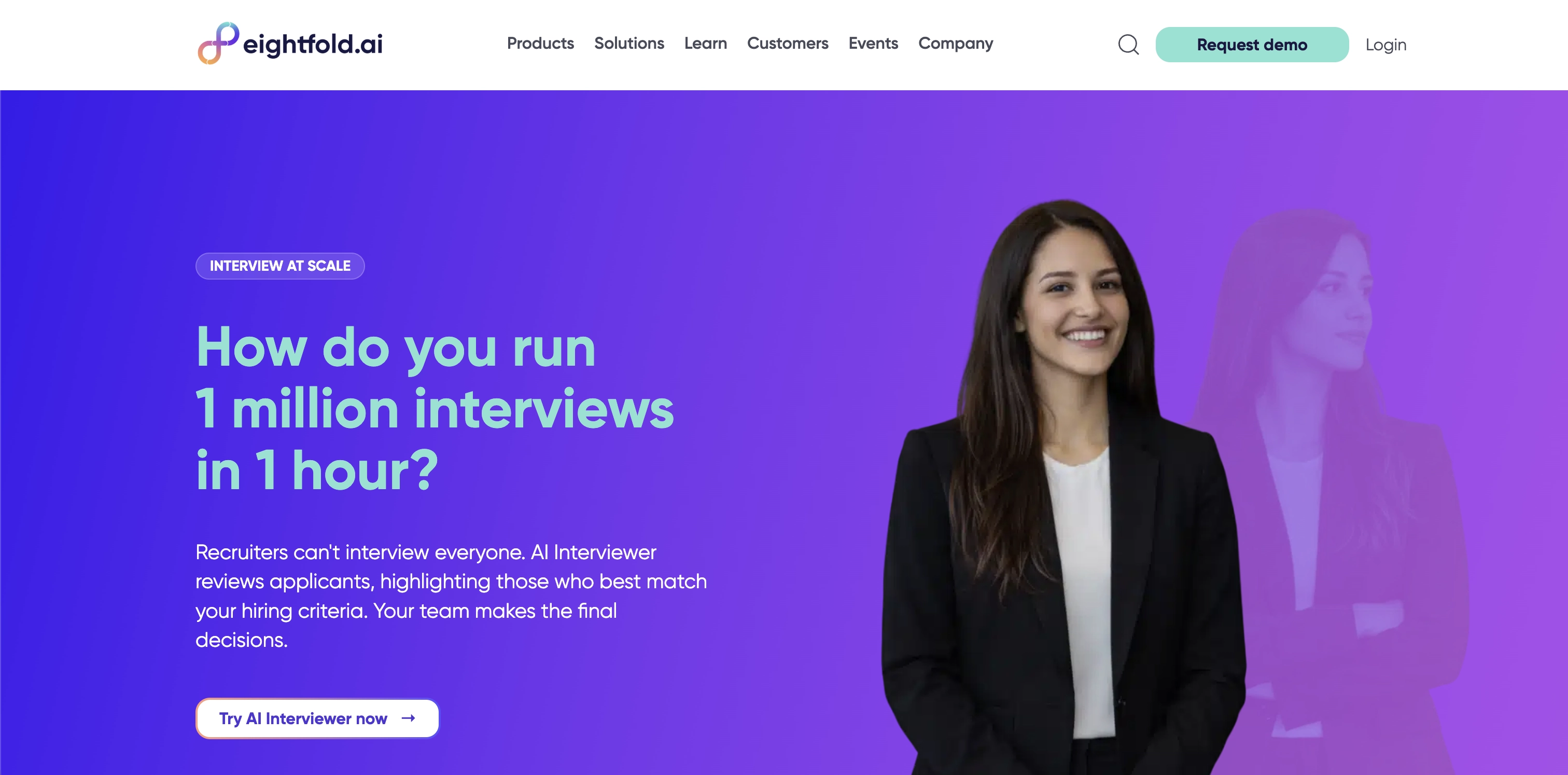
Eightfold's Talent Intelligence Platform uses deep learning to match candidates to roles based on inferred skills rather than keyword matching, identifying qualified candidates from underrepresented talent pools and internal mobility opportunities that traditional ATS filtering misses. Its bias mitigation tools are designed to support EEOC compliance in AI-assisted hiring.
Core features: Skills-based candidate matching, internal mobility recommendations, workforce planning analytics, diversity pipeline analysis.
US compliance: Built-in adverse impact analysis; EEOC-aware matching logic; supports NYC Local Law 144 audit requirements for automated employment decision tools.
CT Labs Perspective: Eightfold is a strong talent matching layer. CT Labs complements it with the downstream workflow orchestration that converts Eightfold's candidate recommendations into automated screening, scheduling, and onboarding actions across connected systems.
Best for: Large enterprises focused on skills-based hiring, internal mobility, and AI-assisted diversity sourcing.
3. Ema (Emerging)
.webp)
Ema positions itself as a "universal AI employee": a multi-skill agent that handles tasks across HR, finance, legal, and operations by learning from existing workflows and automating them without requiring custom integrations for each task. Its HR capabilities include onboarding coordination, policy document generation, and employee query handling. As an emerging platform, its production track record in enterprise HR environments is still developing.
Core features: Multi-function AI agent across HR and adjacent functions, workflow learning from existing processes, natural language task execution.
US compliance: SOC 2 Type II certified; US data residency available. Compliance-specific HR configurations should be validated against applicable state AI hiring laws before deployment in regulated hiring contexts.
CT Labs Perspective: Ema addresses the cross-function automation opportunity that single-function HR tools miss. CT Labs provides deeper compliance governance and enterprise integration architecture for organizations with complex regulatory environments.
Best for: Growth-stage companies seeking a flexible AI agent that spans HR and adjacent functions without separate point solutions.
4. HireVue
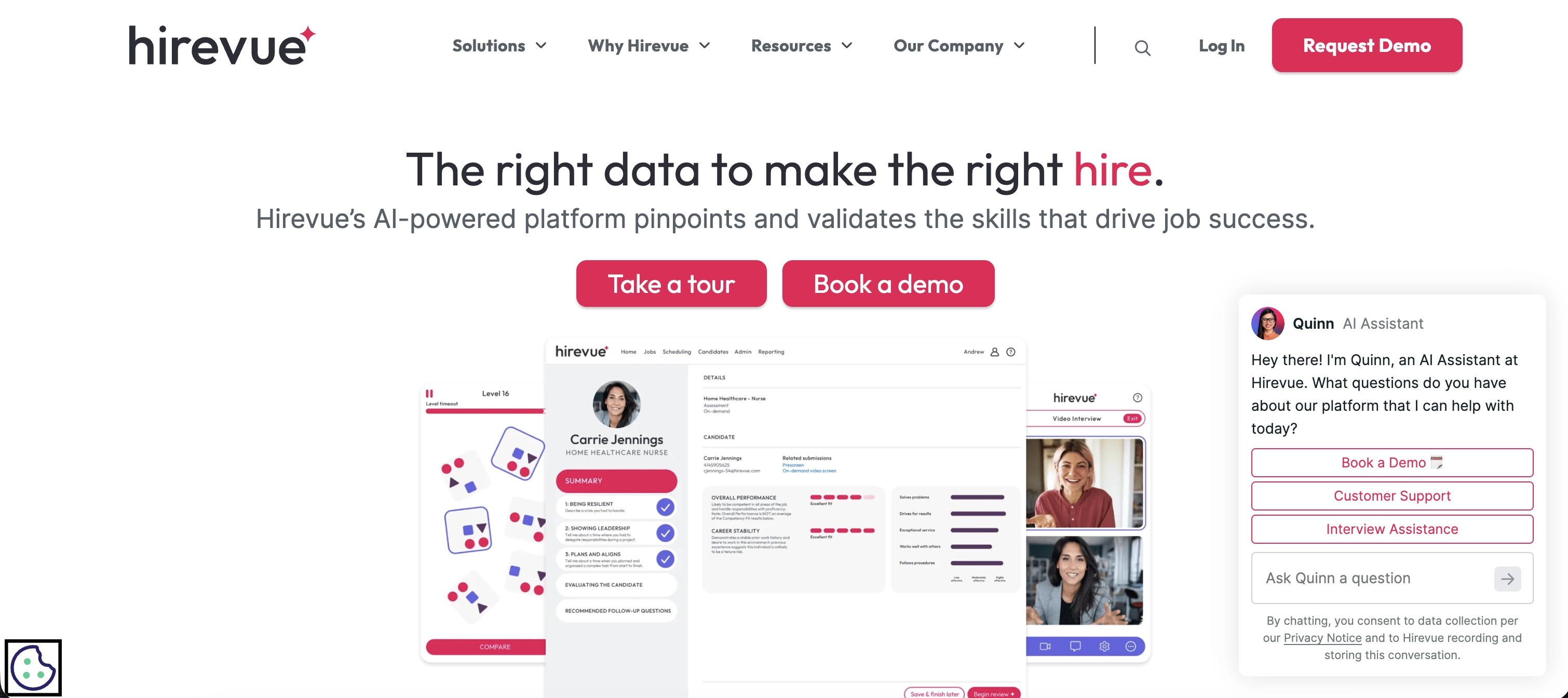
HireVue's AI-powered assessment platform administers structured video interviews and game-based cognitive assessments, scoring candidate responses against validated models. It is the most established platform for AI-assisted structured interviewing in the US enterprise market, with a specific compliance record around third-party algorithmic audits.
Core features: Structured video interview scoring, game-based assessments, interview guide generation, predictive hiring analytics.
US compliance: Conducts third-party bias audits per NYC Local Law 144 requirements; publishes algorithmic bias audit results; EEOC-aware scoring models. Illinois BIPA compliance requires candidate consent for biometric data collection in applicable deployments.
CT Labs Perspective: HireVue strengthens structured assessment quality. CT Labs provides the workflow orchestration connecting assessment results to downstream hiring decisions, offer workflows, and onboarding sequences across the full candidate lifecycle.
Best for: Enterprises running structured interviewing at scale with regulatory audit requirements for AI-assisted hiring decisions.
5. Kore.ai HR Agent (Emerging)
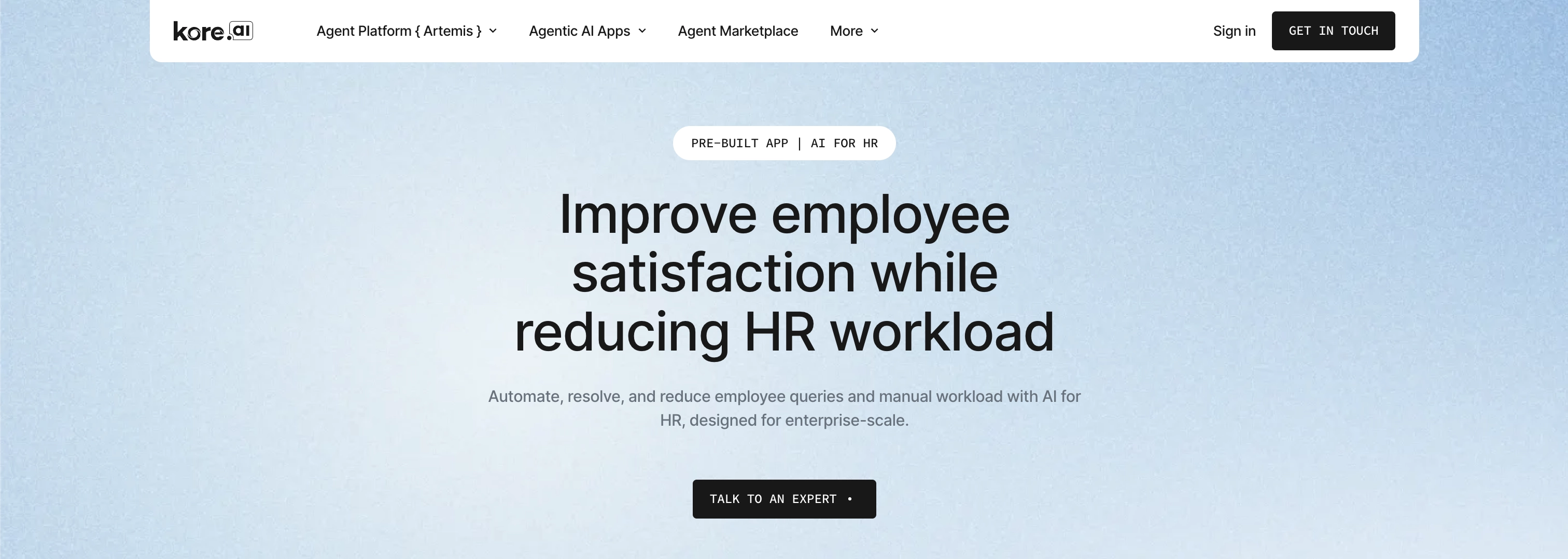
Kore.ai's HR-specific virtual assistant delivers multimodal conversational HR service across voice, chat, and mobile interfaces, handling benefits inquiries, leave management, performance review scheduling, and HR policy navigation. Its platform allows HR teams to configure agent behavior without engineering resources, making it accessible for HR operations teams with limited IT support.
Core features: Multimodal HR virtual assistant (voice + text), benefits and leave self-service, performance management workflow automation, no-code agent configuration.
US compliance: SOC 2 Type II; HIPAA-ready for healthcare HR environments; configurable data residency for US-only processing. Review state-level AI disclosure requirements for employee-facing AI interactions.
CT Labs Perspective: Kore.ai's no-code configurability makes it accessible for HR teams without deep technical resources. CT Labs delivers more complex multi-system orchestration and compliance architecture for organizations with enterprise integration requirements.
Best for: HR operations teams wanting configurable conversational AI for employee self-service without heavy IT dependency.
6. Leena AI
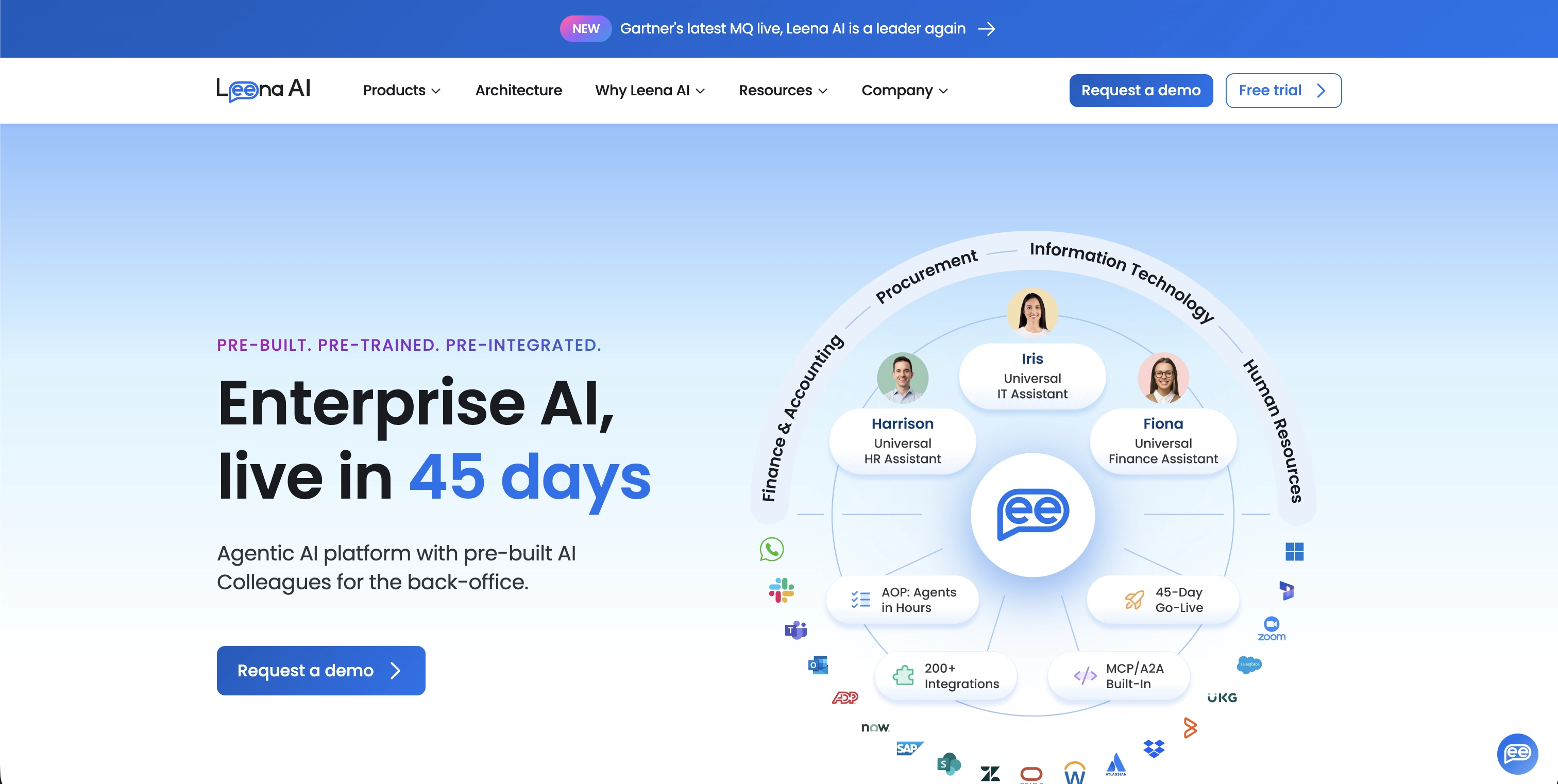
Leena AI deploys a conversational AI agent for employee experience: answering HR policy questions, processing leave requests, submitting IT tickets, and resolving onboarding queries without HR team involvement. Its ticket resolution automation reduces the inbound volume HR service teams manage for routine requests.
Core features: HR helpdesk automation, multi-channel employee query resolution (Slack, Teams, mobile), onboarding workflow automation, leave and benefits self-service.
US compliance: SOC 2 Type II certified; GDPR-ready with US data residency options; HIPAA-ready configurations available for healthcare HR environments. Employee data handling should be reviewed against applicable state privacy laws before deployment.
CT Labs Perspective: Leena AI solves the employee self-service layer effectively. CT Labs adds the compliance governance and cross-system orchestration for organizations that need AI agents acting across HRIS, payroll, and benefits platforms rather than handling only query resolution.
Best for: Organizations seeking to reduce HR helpdesk volume and improve employee self-service for routine requests.
7. Microsoft Copilot for HR
Microsoft Copilot integrates AI into the Microsoft 365 environment, enabling HR teams to automate document drafting, meeting summaries, policy Q&A, and data analysis across SharePoint, Teams, and Outlook. For organizations whose HR operations run largely within Microsoft's ecosystem, Copilot reduces context switching between HR platforms and productivity tools.
Core features: HR policy document drafting, meeting summarization for performance reviews, workforce analytics through Power BI integration, employee FAQ automation via Teams.
US compliance: FedRAMP Moderate authorized, SOC 2 compliant, supports HIPAA for applicable healthcare configurations. Data residency controls available for US-only data processing.
CT Labs Perspective: Microsoft Copilot excels at document and communication automation but is not purpose-built for HR workflow orchestration or compliance-specific agent logic. CT Labs fills the orchestration layer for organizations that use Microsoft 365 alongside dedicated HRIS and ATS systems.
Best for: Organizations standardized on Microsoft 365 that need AI-assisted HR documentation and communication workflows.
8. Paradox (Olivia)
.webp)
Paradox's Olivia is a conversational AI recruiter that automates candidate screening, interview scheduling, FAQ responses, and application follow-up via text and chat. Its speed-to-interview capability is strongest in high-volume hourly and frontline hiring environments, where manual scheduling creates significant recruiter burden.
Core features: SMS and chat-based screening, automated interview scheduling, candidate FAQ handling, offer letter delivery.
US compliance: EEOC-aware screening logic; processes candidate data under configurable data retention policies; users should validate state-level AI hiring disclosure requirements (California AB 2602, NYC Local Law 144) before deployment.
CT Labs Perspective: Paradox solves the scheduling and initial screening bottleneck efficiently. CT Labs extends that capability into post-screening workflow orchestration, onboarding automation, and the compliance documentation layer that high-volume hiring environments require.
Best for: High-volume, frontline, and hourly hiring environments where scheduling automation drives the most recruiter time savings.
9. Phenom
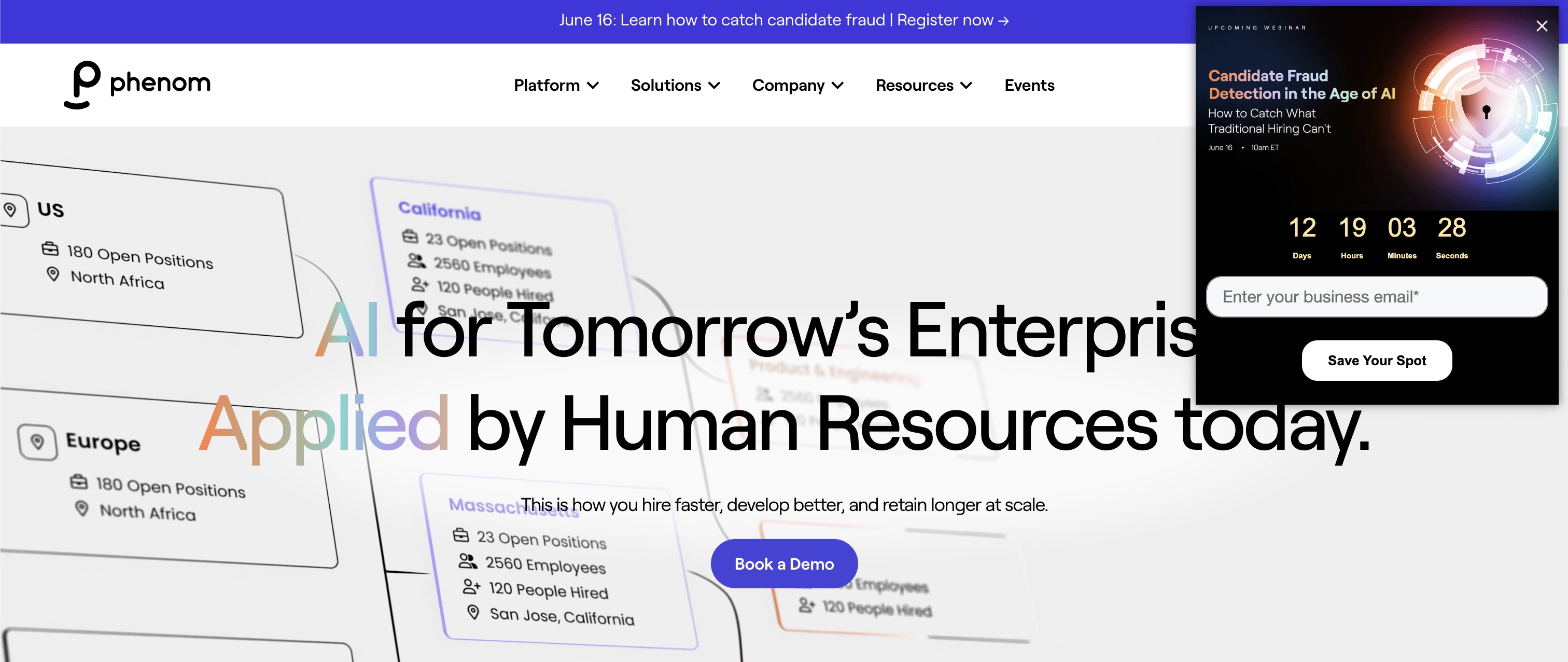
Phenom's talent experience platform applies AI across the full talent lifecycle: career site personalization, candidate matching, employee development recommendations, and recruiter workflow automation. Its unified data model connecting candidate, employee, and alumni data produces recommendations unavailable in point solutions covering only one stage of the talent lifecycle.
Core features: AI career site personalization, CRM-powered recruiter automation, internal mobility AI, workforce intelligence analytics.
US compliance: SOC 2 Type II; EEOC-aware matching logic; supports configurable candidate data retention under CCPA and applicable state privacy laws. Users should audit automated decision-making disclosures for applicable state requirements.
CT Labs Perspective: Phenom covers the talent lifecycle data layer comprehensively. CT Labs provides the agent orchestration layer that activates Phenom's data insights into automated HR actions across connected systems.
Best for: Enterprises building integrated talent ecosystems across recruiting, development, and retention on a shared data platform.
10. Rippling AI
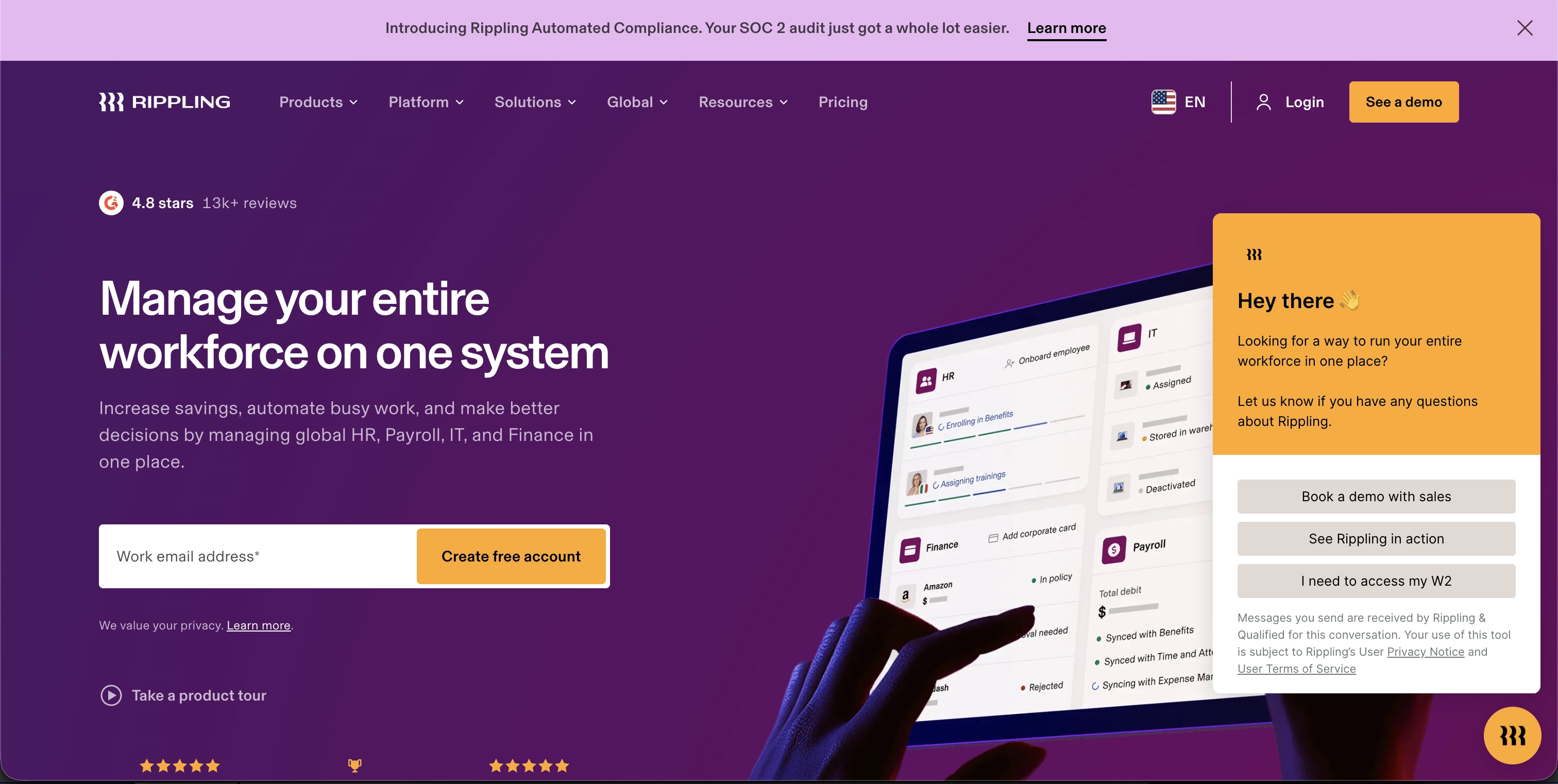
Rippling unifies HR, IT, and payroll on a single platform with AI-assisted automation across employee lifecycle events: onboarding device provisioning alongside HR onboarding, multi-state payroll compliance automation, and policy enforcement across HR and IT systems simultaneously. Its US payroll compliance automation is a specific differentiator for multi-state employers.
Core features: Unified HR + IT + payroll automation, multi-state tax and compliance automation, AI-assisted onboarding workflows, employee lifecycle event triggers across connected systems.
US compliance: Built specifically for US multi-state payroll compliance; automated tax registration for new state hires; FLSA and state wage law automation included. SOC 2 certified.
CT Labs Perspective: Rippling is the strongest mid-market platform for US multi-state HR and payroll unification. CT Labs extends its AI capability with more complex workflow orchestration and compliance governance for organizations with enterprise-scale requirements beyond Rippling's current scope.
Best for: US mid-market companies with multi-state workforces that want HR, IT, and payroll automation on a single platform.
11. Workday AI

Workday's embedded AI operates natively within the Workday HCM platform, providing AI-assisted candidate matching, employee attrition prediction, performance insights, and HR workflow automation for organizations already in the Workday ecosystem. Its ML models are trained on anonymized data from Workday's large enterprise customer base.
Core features: AI-powered skills inference, predictive attrition modeling, automated job requisition matching, natural language HR reporting.
US compliance: SOC 1 and SOC 2 certified, GDPR-ready, supports EEOC reporting. Adverse impact analysis tools available for talent decisions.
CT Labs Perspective: Workday AI is deeply capable within its ecosystem but requires Workday as the system of record. CT Labs deploys across existing HR tech stacks without requiring platform migration, and adds compliance governance layers that Workday's out-of-box configuration does not include for multi-state edge cases.
Best for: Enterprise organizations standardized on Workday HCM that want AI embedded in existing workflows.
How to Choose the Right AI HR Agent
Match the agent to your primary bottleneck. High-volume recruiting bottlenecks call for conversational scheduling automation (Paradox, HireVue). Enterprise talent matching problems call for skills intelligence platforms (Eightfold, Phenom). Employee self-service volume calls for HR helpdesk automation (Leena AI, Kore.ai). Multi-state payroll and compliance automation calls for unified platforms (Rippling). Complex cross-system workflow orchestration with compliance governance calls for purpose-built agent platforms (CT Labs).
Evaluate US compliance architecture specifically. Ask each vendor for documentation on EEOC adverse impact analysis, NYC Local Law 144 audit compliance for automated employment decision tools, state biometric data handling (Illinois BIPA, Texas CUBI), and California CPRA applicability to employee data. Vendors whose compliance documentation is generic or incomplete represent liability exposure in US regulated hiring environments.
Confirm integration depth with your current stack. AI HR agents that require replacing your existing HRIS, ATS, or payroll platform to function create larger implementation projects than most organizations plan for. Prioritize agents with documented integrations to your specific platform versions.
Evaluation checklist:
- [ ] SOC 2 Type II certification confirmed
- [ ] EEOC adverse impact analysis documented and available
- [ ] NYC Local Law 144 audit compliance confirmed if using automated employment decision tools
- [ ] State biometric and AI disclosure requirements reviewed for your operating states
- [ ] Integration depth validated against your current ATS, HRIS, and payroll systems
- [ ] Pilot scoped on representative production use cases, not vendor demos
- [ ] Success metrics defined before deployment begins
CT Labs: AI Agents Purpose-Built for US Compliance and HR Agility
CT Labs addresses the requirement that most HR AI platforms handle partially: coordinating AI agents and human HR professionals across the full range of HR workflows while maintaining the audit trails, compliance governance, and integration architecture that US enterprise HR environments require.
Its deployment model begins with a structured mapping of your current HR workflows, compliance requirements, and system integrations before any agent configuration begins. This prevents the pattern of deploying AI agents that perform well on simple cases and fail on the compliance-sensitive edge cases that define HR liability exposure. Its multi-agent architecture routes straightforward tasks to AI agents for speed and routes compliance-sensitive decisions to human reviewers for accountability, with complete logging of every action for regulatory audit purposes.
Contact CT Labs at ctlabs.ai to discuss AI agent deployment for your HR environment.
Common Questions About AI HR Agents in 2026
Are AI agents in HR compliant with US employment law?
Compliance depends entirely on how each agent is configured and deployed. NYC Local Law 144 requires annual bias audits for automated employment decision tools used in hiring. Several states require disclosure to candidates when AI is used in hiring decisions. Illinois BIPA requires consent for biometric data collection. The agents in this guide vary significantly in how they address these requirements; reviewing vendor compliance documentation against your specific operating states is mandatory before deployment.
What HR tasks are AI agents best suited for in 2026?
AI agents deliver the highest ROI in HR on high-volume, rule-applicable tasks: interview scheduling, benefits FAQ resolution, onboarding task routing, compliance document generation, and policy Q&A. Tasks requiring nuanced human judgment, including performance improvement discussions, termination decisions, and accommodation evaluations, should retain human oversight with AI providing information support rather than autonomous action.
How long does it take to deploy an AI HR agent?
Deployment timelines vary by integration complexity. Conversational self-service agents on a single channel deploy in two to six weeks. Full workflow orchestration agents integrated across HRIS, ATS, and payroll systems typically require eight to sixteen weeks for integration, configuration, testing, and staff training. Organizations that skip parallel testing phases encounter compliance failures in production that a controlled pilot would have identified.
How do AI HR agents support diversity and inclusion?
AI agents support diversity initiatives by applying consistent screening criteria across all candidates, removing the scheduling and follow-up inconsistencies that disadvantage candidates outside recruiters' immediate networks, and surfacing qualified candidates from skills-based matching that keyword-filtered searches miss. The risk is the reverse: AI systems trained on historical hiring data encode historical bias. EEOC-aware configuration, adverse impact monitoring, and third-party audits are required to ensure AI-assisted hiring expands rather than narrows diverse candidate consideration.