
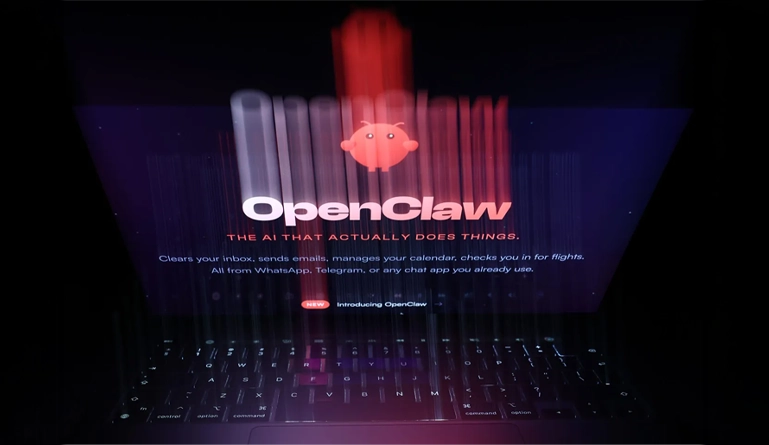
When Peter Steinberger published Clawdbot in November 2025, it attracted the attention of developers experimenting with autonomous AI workflows. By February 2026, when Steinberger announced he would be joining OpenAI and that a non-profit foundation would take stewardship of the project under its new name, OpenClaw, it had already moved from developer curiosity to enterprise risk surface. Within weeks, security researchers had disclosed a critical privilege escalation vulnerability scoring 9.9 on CVSS 3.1. By March, confirmed malicious packages in the OpenClaw skill marketplace had grown to approximately 900, representing roughly 20 percent of the total ecosystem.
OpenClaw is not the first autonomous agent framework and will not be the last. But it has become the clearest signal yet that the agentic AI wave is not arriving on a managed enterprise timeline. It is arriving on an open-source timeline, driven by developers and employees who will deploy these tools whether IT has approved them or not.
For enterprise CIOs, OpenClaw is both a specific security concern and a forcing function. The question is no longer whether to develop a response strategy for autonomous AI agents. It is whether that strategy will be proactive or reactive.
What OpenClaw Is and Why It Spread So Quickly
OpenClaw is an open-source autonomous AI agent framework designed to plan tasks, take actions, and operate across systems without human prompting between steps. An OpenClaw agent does not generate a response and wait for the next instruction. It perceives a goal, accesses the tools and systems available to it, sequences the steps required to accomplish the goal, and executes them continuously until completion or failure.
In practical enterprise terms: an OpenClaw agent with access to a calendar, email, CRM, and internal documentation system can schedule meetings, pull reports, draft and send communications, update records, and trigger downstream workflows, all operating on the credentials and permissions of the user who deployed it, without human intervention between steps.
This capability is what drove rapid adoption. Tools that reduce repetitive knowledge work by handling multi-step workflows autonomously address a genuine and universal pain point. OpenClaw's open-source distribution model means there is no license, no IT procurement process, and no approval gate between an employee who wants to deploy an autonomous agent and their ability to do so.
Skywork AI's 2026 analysis of OpenClaw's adoption trajectory describes the platform as providing a "zero-friction path to autonomous workflow deployment," which is precisely the characteristic that makes it both attractive to employees and difficult for enterprise IT to contain through standard procurement controls.
The Security Profile: What the Research Shows
The security profile of OpenClaw in enterprise environments, documented across multiple research publications in early 2026, is specific enough to warrant direct attention rather than general AI security platitudes.
CVE-2026-32922: Critical privilege escalation. Disclosed in early 2026, this vulnerability in OpenClaw's device.token.rotate function fails to constrain newly minted token scopes to the caller's existing scope set. In enterprise deployment terms: an agent operating within defined permission boundaries could use this flaw to escalate its own access. CVSS 3.1 score of 9.9. Organizations with OpenClaw instances in production environments should treat this as a first-priority remediation item.
Exposed instances at scale. SecurityScorecard reported in February 2026 that 40,214 internet-exposed OpenClaw instances were observable, with 35.4 percent flagged as vulnerable. Infosecurity Magazine placed the vulnerable proportion of observed deployments at 63 percent. At either figure, the scale of unpatched exposure in enterprise environments is significant.
Malicious skill supply chain. OpenClaw's functionality is extended through a skill marketplace called ClawHub, which, as of February 2026, contained over 10,700 packages. Bitdefender's analysis found approximately 900 confirmed malicious packages, approximately 20 percent of the ecosystem. Skills in the ClawHub marketplace operate with the same identity and permissions as the base agent, meaning a malicious skill installed by an employee can access the same enterprise systems the employee has access to.
Governance gap by design. Microsoft's security blog analysis, published February 2026, noted that as of the March 2026 early preview, OpenClaw provides no multi-tenant governance, no PII detection, no content safety guardrails, no compliance audit trails, and no cost attribution. These are not missing features to be added in a future release; they are architectural gaps that reflect the platform's origin as a developer tool rather than an enterprise governance product.
The governance gap is the issue that scales beyond OpenClaw to every autonomous agent framework in the current market. An agent operating on enterprise systems with employee-level credentials, making autonomous decisions and taking autonomous actions, generates an activity record that compliance, audit, and legal functions require. If that record does not exist, or exists only in formats that enterprise systems cannot process, the compliance implications accumulate with every action the agent takes.
What Makes Autonomous Agents Different from Previous Automation
The security and governance concerns that OpenClaw surfaced are not new in kind but are new in scale and speed. Understanding what distinguishes autonomous agents from previous automation categories helps CIOs calibrate their response appropriately.
Traditional automation is bounded. Robotic process automation follows a scripted sequence of steps when triggered. It fails predictably when inputs deviate from expected formats. Its permission surface is defined by what the script accesses, not by what the executing identity is authorized to access.
Autonomous agents inherit the full permission set of the deploying identity. An OpenClaw agent deployed by an employee with read/write access to the CRM, email, calendar, and file storage operates with that full permission set across all connected systems. Every tool call the agent makes is an action taken under the employee's credentials. The agent's decision to take an action is not reviewed before execution; it is taken based on the agent's interpretation of the goal it was given.
Agents interact with systems that were not designed for agent access. Most enterprise systems are designed with the assumption that a human is making decisions about when to read, write, or modify data. An agent that queries a database, pulls data from an ERP, updates a CRM record, and sends an email summarizing the results has interacted with four enterprise systems in a sequence that no human reviewed. The access controls on each system were not designed for this interaction pattern.
Employees will deploy agents regardless of IT policy. BCG's 2026 analysis of the OpenClaw phenomenon observes that enterprise AI governance strategies built on the assumption that IT controls the deployment of AI tools are structurally outdated. Employees have direct access to open-source agent frameworks, consumer AI products with agentic capabilities, and browser extensions that implement autonomous workflows. The governance challenge is not preventing deployment; it is managing deployment that is already occurring.
The Governance Gap: How Wide It Is
The data on enterprise governance readiness for autonomous agents is consistent across multiple 2026 studies and consistently concerning.
A 2026 survey found that 97 percent of organizations are exploring agentic AI strategies. Only 36 percent have a centralized approach to agentic AI governance. Twelve percent use a centralized platform to maintain control over AI sprawl. Forrester predicts that 60 percent of Fortune 100 companies will appoint a head of AI governance in 2026, which implies that 40 percent will not, and that the majority of Fortune 100 companies did not have one going into this year.
ISACA's 2026 analysis of agentic AI evolution describes the governance gap as "the most operationally consequential risk CIOs are underweighting in current AI strategy." The specific concern is that agents operating on enterprise credentials, accessing enterprise data, and taking enterprise system actions are generating a compliance and audit record that existing governance frameworks were not designed to capture or process.
The companies making the most progress on autonomous agent governance in 2026 are treating agents not as digital employees with broad discretion but as governed execution engines with defined tool access, explicit permission scoping, monitored activity trails, and human escalation protocols for decisions above defined autonomy thresholds.
A CIO Response Framework for the OpenClaw Era
The following framework reflects the current state of enterprise best practice for autonomous agent governance, synthesized from BCG, EY, Microsoft Security, and ISACA publications in early 2026.
1. Assume agents are already in your environment.
The governance posture that starts from "we will decide whether to allow autonomous agents" is behind reality for most enterprises. Start instead from the question: "Where are agents already operating, what credentials are they using, and what can we observe about their activity?" Shadow IT discovery specific to AI and agent tools is the appropriate first step for most organizations.
2. Treat every agent as untrusted code with persistent credentials.
Microsoft's security guidance published in February 2026 frames this directly: OpenClaw and tools like it should be treated as untrusted code execution running under persistent credentials. The security controls appropriate for this category, including network isolation, credential scoping, activity monitoring, and kill-switch capability, are the starting point for any enterprise agent deployment, not the advanced configuration.
3. Define and enforce minimal permission scoping for all agents.
An agent that needs to read calendar data to schedule meetings should have read access to calendar data and nothing else. The practice of deploying agents under full employee credentials, because it is the easiest configuration, creates unnecessary exposure. Permission scoping for agents is operationally similar to service account management: the principle of least privilege applies, and exceptions require documented justification.
4. Build a governed skill and integration inventory.
For organizations deploying OpenClaw or similar frameworks, the skill and integration surface is the primary attack vector. Establish an approved list of skills and integrations with security review, and prohibit installation from unreviewed sources. The ClawHub malicious package findings are a direct consequence of unapproved skill installation in enterprise contexts.
5. Instrument activity trails for compliance and audit.
Every action an autonomous agent takes under enterprise credentials should be logged in a format accessible to compliance and audit functions. Establishing this instrumentation before agents reach significant deployment scale is substantially easier than retrofitting it after. For organizations in regulated industries, the compliance requirements that apply to human-initiated system actions apply equally to agent-initiated ones.
6. Establish human escalation protocols.
Agents operating in enterprise environments should have defined boundaries beyond which they surface a decision for human review rather than proceeding autonomously. These boundaries should be set based on the potential impact of the action: financial transactions above a threshold, communications to external parties, system configurations, and data deletion are examples of action categories that warrant human review regardless of the agent's assessed confidence.
7. Designate ownership for agentic AI governance.
The governance gap documented across 2026 research consistently traces to the absence of a named owner for agentic AI governance. Whether that is the CISO, a new Chief AI Risk Officer, or a cross-functional governance committee, accountability needs to be assigned before incidents require it.
The Broader Signal
OpenClaw is a specific tool with specific vulnerabilities. But the wave it represents, open-source autonomous agents operating on enterprise credentials with minimal governance controls, will continue regardless of what happens to any individual platform. The developer who built OpenClaw has joined OpenAI. The non-profit foundation taking over the project will continue its development. And the next open-source autonomous agent framework is already in development in a dozen repositories.
The appropriate CIO response is not a strategy for managing OpenClaw. It is a governance architecture for managing autonomous agents as a category: one that is designed for the reality that these tools are already in enterprise environments, that employees will continue to deploy them, and that the competitive advantage in 2026 belongs to organizations that govern them effectively rather than those that attempt to prohibit them unsuccessfully.
Organizations that build agent governance infrastructure now, before the category matures and before regulatory frameworks codify the requirements, will be in a substantially stronger position than those that build it reactively in response to an incident or a compliance finding.